Golf travel
The Grand Scottish Detour: Why Gleneagles Is More Than a Famous Tee Time
Published 24 August 2026
Three distinct golf courses, a century-old country hotel and enough depth beyond the fairways to make Gleneagles a destination rather than a stopover. Here is how to choose the experience that suits you.
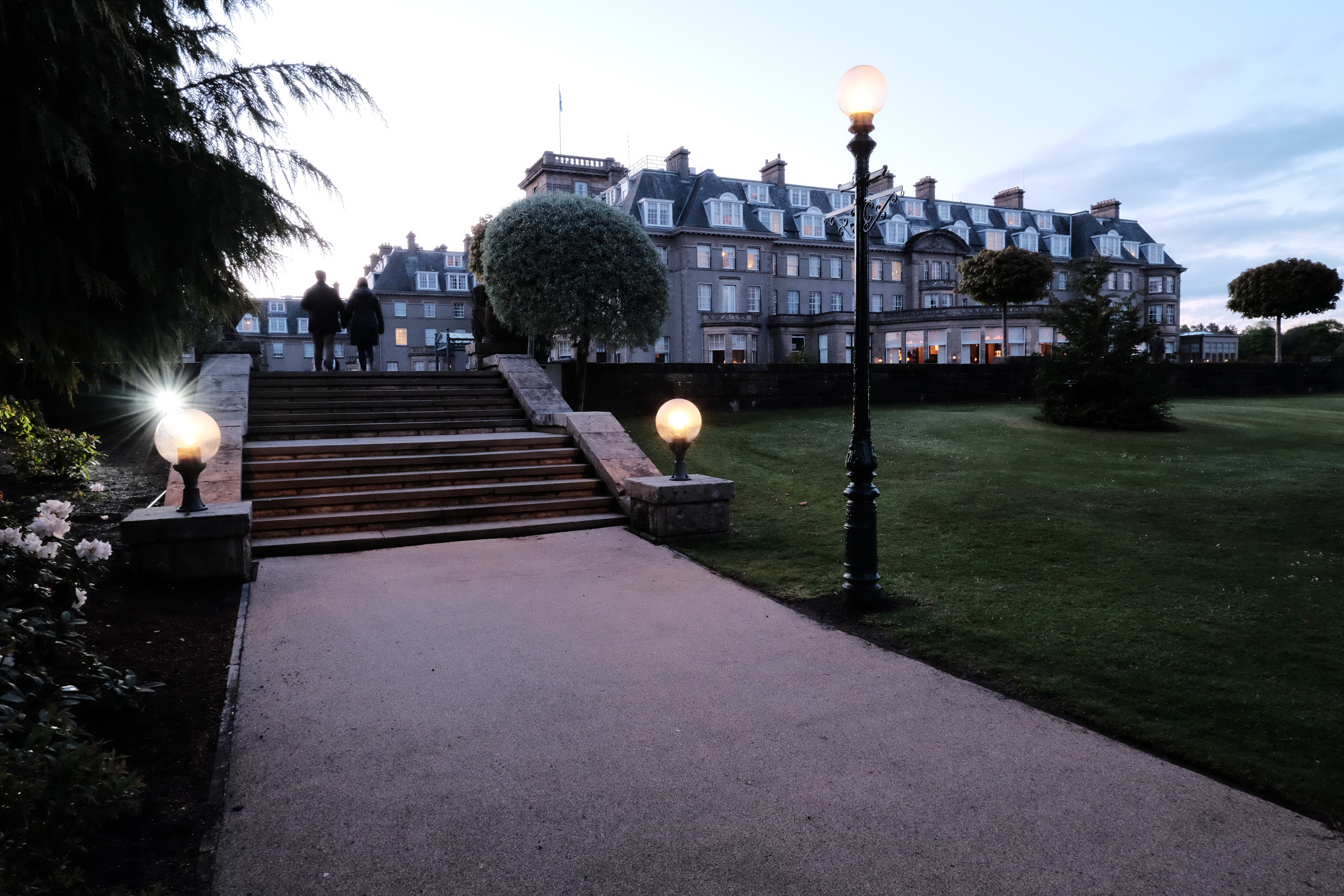
Gleneagles occupies an unusual place in Scottish golf. It is not a pilgrimage built around one seaside links, nor a resort where the hotel merely happens to overlook a course. The attraction is choice: three championship layouts with markedly different personalities, gathered around a country hotel designed to make the hours before and after a round feel as considered as the golf itself. That breadth is precisely why it rewards planning rather than impulse.
The King’s Course is the natural starting point. James Braid created it, and it opened in 1919, five years before the hotel. Gleneagles currently lists it at 6,471 yards from the white markers. Those figures do not explain its appeal as well as the routing: rising and falling through Perthshire terrain, with raised greens, bunkering that asks for decisions and views that keep reopening towards the hills. The resort calls it an inland links; the more useful description is strategic, animated golf that changes character with the ground beneath your feet. It is the course for players who value architecture and placement over tournament branding.
The Queen’s offers a different rhythm. Gleneagles describes it as a par-68 heathland course threading through high ridges on the estate, and lists it at 5,965 yards from the white markers. Its shorter card does not make it a ceremonial second round. The official course guide repeatedly stresses elevation, deceptive greens and the need to choose a line carefully. For mixed-ability groups, couples or anyone who wants beauty without a relentless examination, it may be the most persuasive fit.
Then there is the PGA Centenary. Designed by Jack Nicklaus, it hosted the 2014 Ryder Cup and 2019 Solheim Cup, and the resort lists it at 6,815 yards from the white markers. It is the obvious choice for golfers who want to walk tournament ground and accept the sterner, more modern challenge. The open views towards the Ochil Hills add scale, but this is not simply the photogenic option: the course guide warns that golfers must keep their wits about them across a layout approaching 7,000 yards.
A discerning itinerary should therefore begin with temperament, not reputation. Pair the King’s and Queen’s for contrast and old-school character. Add the PGA Centenary if championship history matters or the group wants the most exacting test. The estate also lists extensive practice facilities, caddie support and the PGA National Academy for Scotland. Availability, course maintenance and access policies can change, so confirm the live position directly before fixing travel.
The hotel is what turns those rounds into a proper escape. Gleneagles says the estate covers 850 acres and currently offers 205 individually designed rooms and 28 suites. The tone is country-house rather than minimalist: a place suited to unhurried breakfasts, a change of clothes before dinner and a second evening that does not feel like repetition. It can work for a golf-first group, but it also gives a non-playing companion a credible reason to choose the same trip.
Dining has similar range. The resort lists ten restaurants and bars, from the clubhouse atmosphere of Auchterarder 70 to the formal Strathearn and Restaurant Andrew Fairlie, which the hotel describes as holding two Michelin stars. That variety matters more than a single trophy reservation: it allows one celebratory dinner without making every meal an occasion. Gleneagles advises guests to pre-book dining and leisure, sensible guidance for anyone travelling around fixed tee times.
The spa completes the argument for staying rather than driving on. Its official information lists 20 treatment rooms, a steam room, sauna cabin, vitality pool, relaxation courtyard and spa café. Those are factual facilities, not a guarantee of serenity; access conditions and treatment availability should be checked when booking. Still, the ability to separate a hard morning on the PGA Centenary from a slower afternoon is part of the resort’s genuine usefulness.
Who is Gleneagles for? Golfers who want architectural variety without changing hotels; couples balancing serious play with comfort; and groups prepared to spend for convenience, service and choice. It is less compelling for the purist seeking only raw coastal links or for travellers who prefer to explore a different town every night. The luxury here is not exclusivity for its own sake. It is the rare freedom to build a deeply golf-led trip without asking everyone in the party to experience it in exactly the same way.
More from Golf travel →